Sustainable quality due to biomass
.webp "Nature_Sustainability")

.webp "Mona Hollborn")
Forbo develops sustainable products and innovative process technologies to support our customers on their green transformation journey. Without compromising on quality or efficiency, our conveyor and power transmission belts marry superior performance with a lower carbon footprint.
The bio-attributed feedstock we use, such as polyvinyl chloride (PVC) or polyurethane (PU), drastically cuts the fossil fuels required. The biomass balance (BMB) approach is one way of calculating their carbon footprint and can reach net-zero under ideal conditions. Consequently, you can play an active role in protecting the climate – while products continue to deliver top performance.
Mona Hollborn, Global Sustainability Manager
At the start of production, bio-based feedstock, recycled plastics and fossil fuels, such as petroleum or natural gas, are used to make pre-products that are identical in chemical terms. For instance, some of the polyvinyl chloride (PVC) Forbo uses is made from cooking oil as a feedstock.
.webp "Separate production")
In the same production facility, our feedstock suppliers then turn these pre-products into the plastics we use. They create plastics with the same characteristics as conventional materials. Consequently, our conveyor and power transmission belts continue to meet exacting requirements in terms of quality and performance.
.webp "In-process blending")
A certified biomass balance system (BMB) precisely documents the share of renewable biomass incorporated into production. This type of transparent tracking is key to a solid carbon footprint.
.webp "biomass incorporated into production.")
The share of biomass calculated is attributed to specific feedstock batches. Because feedstock batches manufactured via the mass balance approach have different proportions of bio-based feedstock, the resulting plastics are classified as bio-attributed.
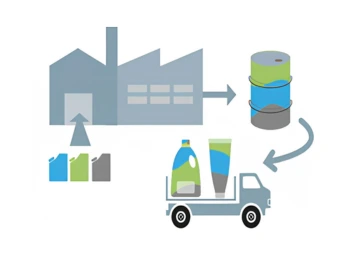
By choosing particular Forbo belting products, you’re actively helping to protect the environment, without compromising on exceptional product performance.
Like to find out more about Forbo Siegling’s commitment to sustainable products?